How to Spot a Fake Rolex
Rolex is one of the most recognised and desirable watch brands in the world, and unfortunately, also one of the most counterfeited. With the rise of high-quality “super fakes,” it’s no longer easy to tell a genuine Rolex from a replica at a glance.
If you’re buying pre-owned, understanding the key signs of authenticity is essential. Every real Rolex is built to exacting standards: precise engravings, smooth movement, solid materials, and perfect detailing. Counterfeits often get one or more of these details wrong.
This guide highlights the main differences between real and fake Rolex watches, helping you buy with confidence and avoid costly mistakes.
Quick Rolex Authenticity Checklist
-
Solid weight: Premium metals give genuine Rolex watches a noticeably substantial feel.
-
Smooth sweep: The second hand should glide cleanly, not tick.
-
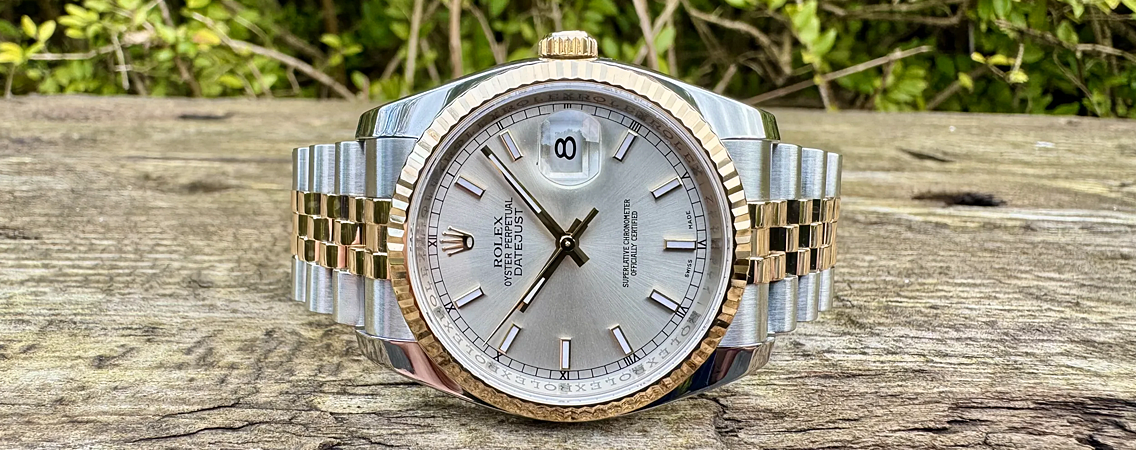
Cyclops lens: Clear 2.5× magnification, properly centred over the date.
-
Crisp dial text: Sharp fonts, clean printing, and perfectly aligned markers.
-
Rehaut & crystal: Correct ROLEXROLEXROLEX engraving and a tiny coronet at 6 o’clock.
-
Quality engravings: Deep, sharp serial and reference numbers; never faint or uneven.
-
Movement: Rolex movements are precise, quiet, and impeccably finished.
-
Documentation: Matching serials, correct paperwork, and verifiable history.
-
Trust your seller: Buying from a reputable specialist is the best protection against counterfeits.
On This Page:
The Rise of Counterfeit Rolex Watches
Weight, Feel, and Build Quality
Movement and Second Hand Sweep
Cyclops Lens and Date Magnification
Dial, Fonts, and Markings
Serial and Model (Reference) Numbers
Case Back and Crown
Bracelet and Clasp Details
Documentation and Provenance
The Movement
Why Trusting Your Seller Matters Most
The Rise of Counterfeit Rolex Watches
The global demand for Rolex watches has created a thriving market for counterfeits. What were once obvious imitations have evolved into sophisticated “super fakes” that can appear convincing even to experienced collectors.
Modern counterfeiters use high-grade materials, automatic movements, and laser-etched details to mimic the appearance of genuine models. These watches often appear authentic in photos or listings, making due diligence more important than ever.
The growth of online marketplaces and social media sales has also made it easier for replicas to circulate. While reputable pre-owned dealers verify every watch through professional inspection, private or unverified sellers may not.
Knowing how to identify a fake Rolex and buying only from trusted, authenticated sources is the best way to protect your investment and ensure your watch is truly genuine.
Weight, Feel, and Build Quality
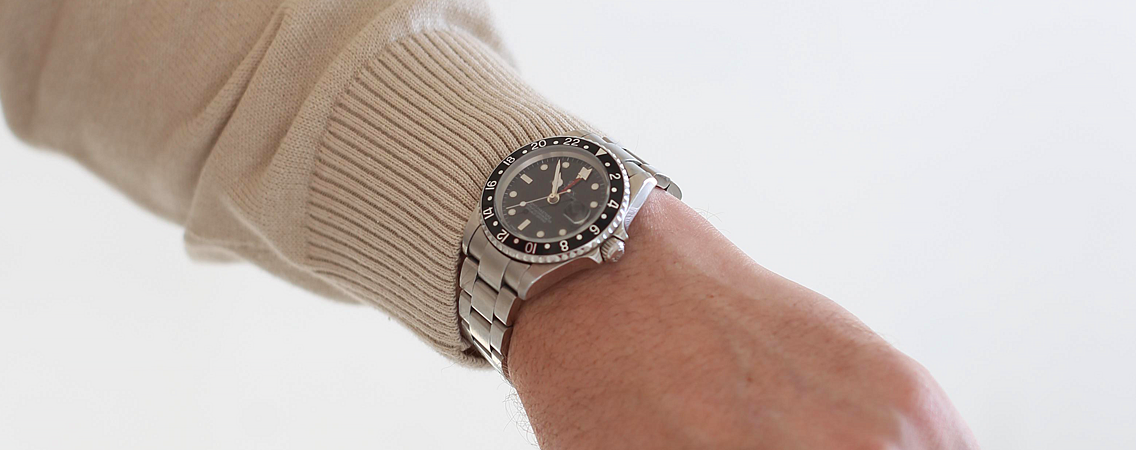
One of the quickest ways to spot a fake Rolex is by how it feels in your hand. Genuine Rolex watches are built from premium materials such as 904L stainless steel, 18k gold, and 950 platinum, giving them a distinct solidity and balance. Rolex’s proprietary 904L steel, denser, more corrosion-resistant, and brighter than the 316L steel used by most manufacturers, adds to the unmistakable weight and quality of an authentic piece.
When assessing a Rolex, pay attention to the following:
-
Weight and density: A real Rolex feels substantial. Counterfeits often use cheaper alloys or hollow components, resulting in a lighter, hollow feel.
-
Finishing quality: Authentic Rolex cases and bracelets have smooth, even finishing with no sharp edges or rough spots. The polish and brushing should be consistent throughout.
-
Bracelet construction: Modern Rolex bracelets are made with solid links and end links, giving them a reassuring heft. Older models such as the GMT-Master II 16710 and Explorer II 16570 used hollow stamped links and end links, so they’re naturally lighter but should still feel sturdy and well balanced.
-
Material authenticity: Rolex uses only premium materials, including 904L stainless steel, 18k yellow, white, or Everose gold, and 950 platinum. Two-tone watches use Rolesor (steel and gold), while some Yacht-Master models combine Rolesium (steel and platinum).
-
Clasp action: The clasp on a genuine Rolex closes with a smooth, firm click, not a loud snap. Any looseness, stiffness, or rattling when handling the bracelet is a warning sign.
A genuine Rolex feels solid, balanced, and meticulously finished. Counterfeits rarely achieve the same density or refinement, no matter how convincing they may appear visually.
Movement and Second Hand Sweep
The movement inside a Rolex is one of its most distinctive and defining features. Every genuine Rolex uses a Swiss-made mechanical movement, either automatic or, in rare cases, quartz (such as the discontinued Oysterquartz line). These movements are designed and built entirely in-house by Rolex, known for exceptional precision and reliability.
A key visual cue is the smooth sweep of the seconds hand. In a genuine Rolex, the seconds hand moves almost fluidly, completing around eight tiny movements per second thanks to the high beat rate of the movement (typically 28,800 vibrations per hour). This creates the illusion of a continuous, gliding motion.
By contrast, most fake Rolex watches use lower-quality mechanical or quartz movements that tick once per second or move in noticeably uneven increments. Even counterfeit watches fitted with automatic movements often have an inconsistent or jerky sweep when compared side by side with the real thing.
Another telltale sign is sound. A genuine Rolex runs almost silently; you shouldn’t hear a loud “tick.” If you can hear a pronounced ticking noise when you hold the watch close to your ear, it’s likely a replica.
Rolex movements are also extremely smooth when winding or setting the time. The crown should turn effortlessly but with a precise, solid feel. Excessive resistance, roughness, or slack in the winding mechanism can indicate a counterfeit or poor-quality movement.
Ultimately, the movement defines the Rolex experience: silent, smooth, and seamless. A fake may look convincing, but the motion of the seconds hand and the feel of the winding crown often tell the real story.
Cyclops Lens and Date Magnification
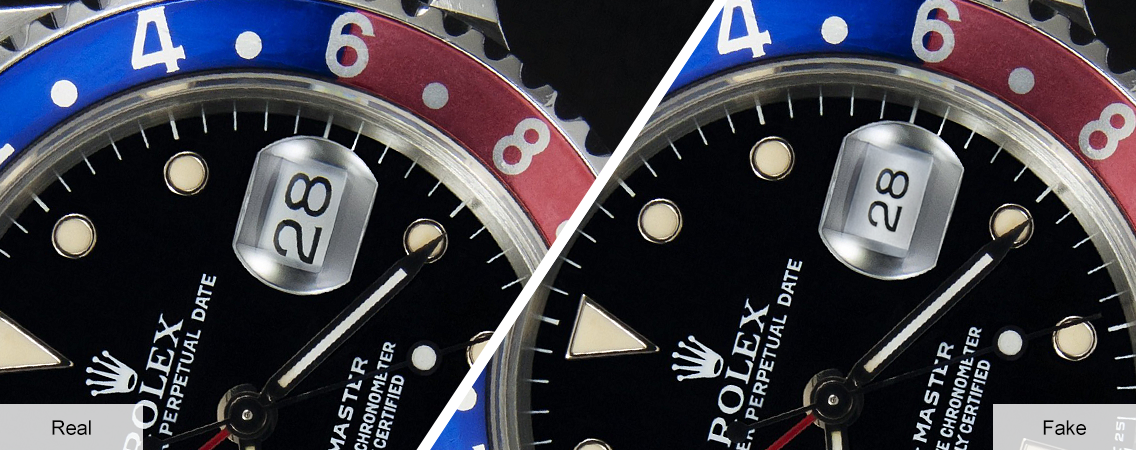
On Rolex models with a date display, one of the most distinctive features is the Cyclops lens, the magnifying bubble built into the sapphire crystal above the date window. Its clarity and precision are key indicators of authenticity.
A genuine Rolex Cyclops lens magnifies the date by 2.5 times, producing a sharp, perfectly centred, and distortion-free image. The lens itself is convex, forming a noticeable raised bump you can feel on the crystal; a reassuring sign of authenticity.
By contrast, counterfeit watches often fail to replicate this detail. Common warning signs include:
-
Flat or barely raised lenses that sit flush with the crystal surface.
-
Weak magnification – often only 1.5× or less.
-
Off-centre alignment between the lens and the date window.
-
Distorted or blurry numerals when viewed through the lens.
-
No anti-reflective coating, leading to excessive glare under light.
-
Visible glue or uneven edges where the lens meets the crystal.
It’s also important to know that not every Rolex with a date display includes a Cyclops lens. Models such as the Sea-Dweller and Deepsea Sea-Dweller omit it entirely to maintain their extreme depth-rating integrity.
Dial, Fonts, and Markings
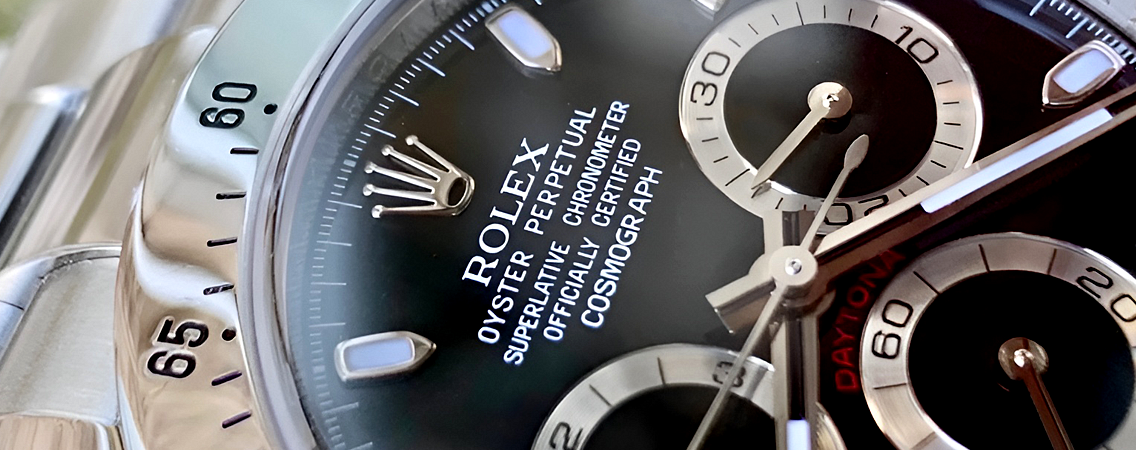
The dial of a Rolex is where the brand’s craftsmanship and precision are most visible, and where counterfeits often fall short. Every genuine Rolex dial is perfectly balanced, with crisp text, consistent font sizes, and flawless alignment between markers and print.
When inspecting the dial, look for the following:
-
Print quality: Genuine Rolex dials feature ultra-sharp, detailed printing. The text should appear solid and smooth, even under magnification. Fakes often have slightly fuzzy or uneven lettering.
-
Logo detailing: The Rolex crown logo at 12 o’clock should be finely defined, with even, symmetrical points. Counterfeit versions often have thicker or poorly shaped crowns.
-
Hour markers and lume: Authentic markers are applied with precision and sit evenly on the dial surface. The luminous material (lume) should be cleanly applied, with no overflow or discolouration.
-
Hands alignment: On a real Rolex, the hour, minute, and seconds hands align perfectly with the markers when viewed straight on. Misalignment, wobble, or poor finishing are signs of a fake.
-
Model-specific accuracy: Ensure the dial layout, font, and logo placement match the reference number. Many counterfeits mix elements from different models, which can be an immediate giveaway.
Another key authenticity feature on modern Rolex watches is the rehaut engraving, the inner bezel ring between the dial and the crystal. Since 2004, Rolex has engraved “ROLEXROLEXROLEX” around the rehaut and placed the serial number precisely at the 6 o’clock position. On genuine watches, these engravings are razor-sharp and perfectly aligned with the hour markers, while fakes often have shallow, rough, or misaligned text.
The dial and rehaut are protected by sapphire crystal, a scratch-resistant glass that replaced acrylic across the Rolex range. Built into this crystal is one of Rolex’s most subtle identifiers, a micro-etched crown at the 6 o’clock position. Introduced in 2002, this tiny laser-engraved coronet is almost invisible without magnification and extremely difficult to reproduce accurately, making it one of the most reliable signs of authenticity.
For added reassurance, it’s always worth comparing your watch against official Rolex imagery from the brand’s website. Each model and reference has distinct design details; even small differences in text spacing, logo shape, or dial colour can reveal a counterfeit.
Serial and Model (Reference) Numbers
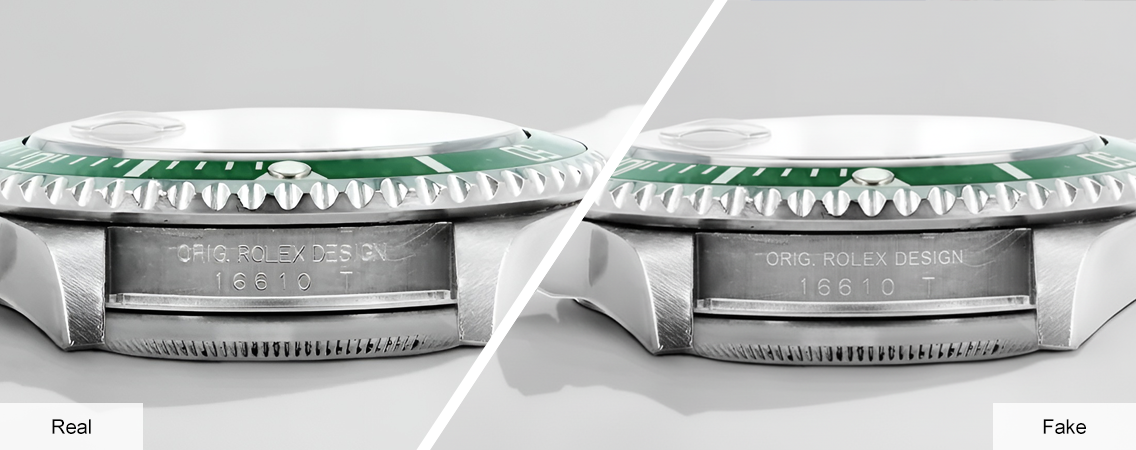
The serial and model numbers on a Rolex are among the most reliable indicators of authenticity. These engravings identify both the individual watch and the specific model configuration, details that are crucial when verifying a pre-owned Rolex.
Where to Find the Numbers
On older Rolex models, both numbers are engraved between the lugs:
-
The model (reference) number appears at the 12 o’clock position.
-
The serial number appears at the 6 o’clock position.
To view them, the bracelet must be carefully removed.
From around 2005 onwards, Rolex began engraving the serial number on the inner rehaut, the smooth metal ring between the dial and the crystal. This made it easier to confirm authenticity without removing the bracelet and harder for counterfeiters to reproduce accurately.
How to Read Them
Reference numbers identify the specific Rolex model, material, and sometimes the bezel or bracelet type (for example, 126610LN denotes a Submariner Date in stainless steel with a black bezel).
Serial numbers are unique to each watch and can be used to estimate the approximate year of production.
When inspecting these engravings, look for the following signs of authenticity:
-
Sharp, precise engraving: Genuine Rolex numbers are laser-etched with clean, even depth and fine detail. They appear crisp under magnification, not rough or sandblasted.
-
Perfect alignment: The numbers and letters should be evenly spaced and centred. Counterfeits often have irregular spacing or uneven depth.
-
Correct formatting: Each Rolex model follows a consistent structure. Reference or serial numbers that don’t match known Rolex patterns are a red flag.
-
Matching paperwork: The serial and reference numbers must match the details on the warranty card, service records, and original paperwork.
To confirm production periods, you can cross-check the serial number using our Rolex Serial Number Chart To help you identify when your watch was made and which range it belongs to.
Remember that counterfeiters sometimes reuse or copy genuine serial and reference numbers. The engraving quality itself, not just the digits, remains one of the strongest indicators of authenticity.
Case Back and Crown
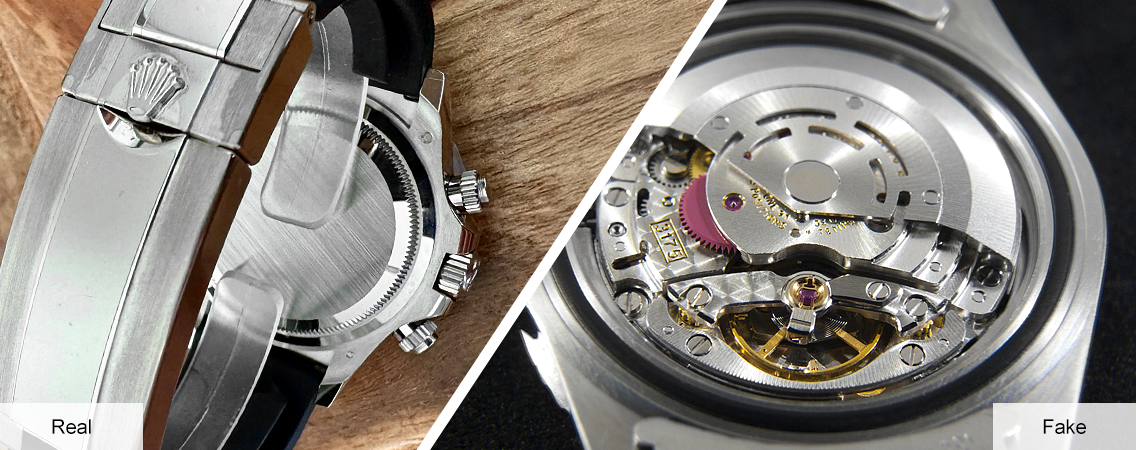
The design and finishing of a Rolex case back and crown offer several clear indicators of authenticity. While counterfeiters can imitate the look of a Rolex dial or bracelet, they often fall short in reproducing these finer construction details.
Case Back
Most genuine Rolex watches feature a smooth, unmarked case back made from high-quality stainless steel, gold, or platinum. The surface should be clean, solid, and free from decorative engravings or transparent “exhibition” windows.
If a Rolex has a see-through case back or visible branding such as “Rolex,” “Geneva,” or model names etched into the rear, it’s almost certainly a fake. There are only a few exceptions to this rule, notably certain vintage or exhibition models produced in very limited numbers, and the Cellini line, which sometimes features decorative detailing.
You should also note that Rolex case backs require a special tool to open. They are precision-sealed for water resistance, and the grooves on the case back should be evenly machined with a solid, high-quality finish. Shallow, uneven, or roughly cut grooves are another sign of inauthenticity.
Crown
The winding crown is one of the most recognisable elements of a Rolex and an area where precision really matters. On a genuine watch:
-
The Rolex coronet logo is finely detailed, with symmetrical points and smooth engraving.
-
The crown screws down securely, turning smoothly with firm, consistent resistance.
-
The triple-dot, twin-dot, or line markings beneath the coronet (on many Oyster models) indicate the type of Triplock or Twinlock water-resistance system fitted; a detail many counterfeits overlook or reproduce incorrectly.
By contrast, fakes often have:
-
Poorly defined or oversized crown logos.
-
Loose or gritty screw-down action.
-
Incorrect or missing lock markings.
Together, the case back and crown provide simple yet reliable points of comparison.
Bracelet and Clasp Details
Rolex bracelets and clasps are engineered with exceptional precision, and the smallest details can reveal a watch’s authenticity. While we’ve covered the overall feel and construction quality, it’s equally important to examine the specific markings and mechanisms that distinguish a genuine bracelet from a counterfeit.
Engravings and Finishing
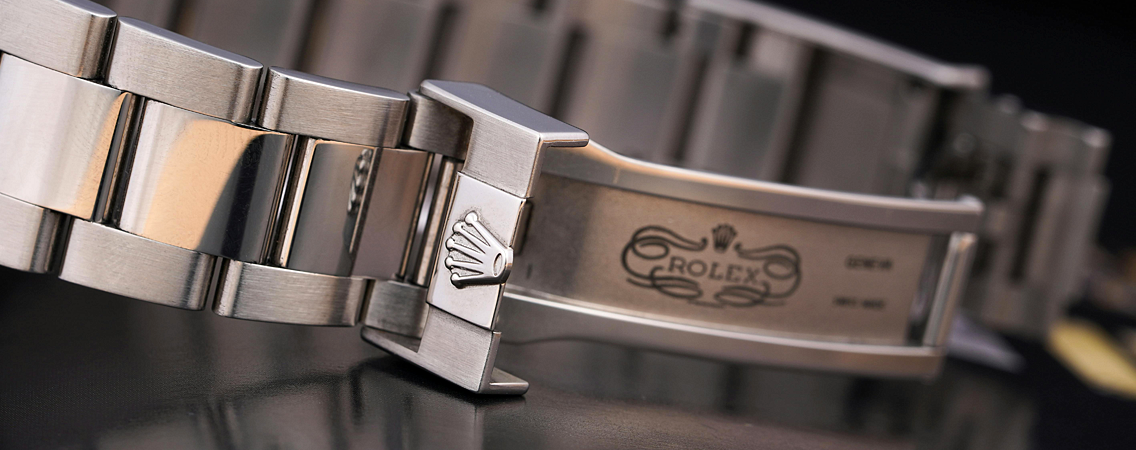
Inside a real Rolex clasp, you’ll find clear, deeply etched engravings, including the Rolex coronet, reference code, and sometimes the stamped production year. These markings are finely detailed and perfectly aligned. Counterfeits often have shallow, uneven, or poorly centred text.
The polishing and brushing on a genuine bracelet are consistent throughout: transitions between polished and satin finishes are smooth, with no rough edges or over-polished surfaces. A fake may show patchy finishing or sharp corners, particularly on the clasp cover and inner hinge.
Clasp Mechanisms
Modern Rolex models use advanced extension systems such as:
-
Easylink – allows for a quick 5 mm adjustment to improve comfort.
-
Glidelock – found on many Submariner and Sea-Dweller models, offering tool-free micro-adjustments.
On genuine watches, these mechanisms glide smoothly and click securely into place. Counterfeits can mimic the look but typically feel loose, stiff, or imprecise when adjusted.
Visual Alignment
When closed, the clasp should sit flush with the bracelet and the Rolex coronet on the clasp cover should be perfectly centred. Misalignment or uneven gaps between the clasp and links are often signs of poor assembly.
Documentation and Provenance
When buying a pre-owned Rolex, documentation is one of the strongest indicators of authenticity and value. While a genuine watch can exist without its papers, having the correct documents and ensuring they match the watch adds confidence, traceability, and resale strength.
What to Expect
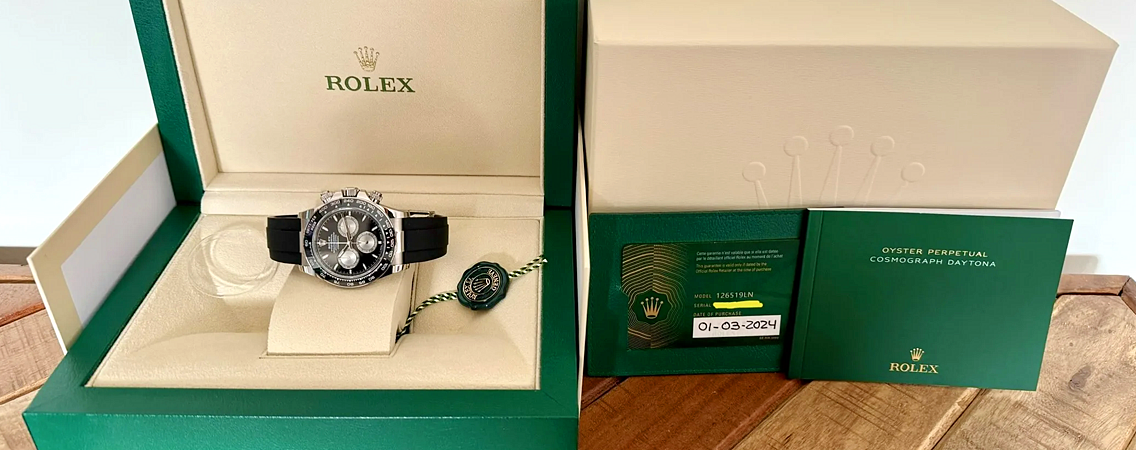
A complete Rolex set typically includes:
-
Warranty card or certificate: Lists the serial and reference numbers, model details, and the authorised dealer where the watch was originally sold.
-
Instruction manual and service booklet: Genuine manuals feature high-quality printing and correct model references.
-
Presentation box and outer packaging: Authentic boxes are solid, with quality materials and precise embossing of the Rolex logo.
-
Hang tags: Often include the model and serial numbers, and can confirm the watch’s original configuration.
All documentation should show matching numbers. The serial and reference details on the warranty card must correspond with those engraved on the watch itself. Any discrepancies, missing details, or reprinted paperwork should be treated with caution.
Service History and Provenance
A documented service history from Rolex or an authorised service centre adds strong reassurance. It confirms that the watch has been opened and inspected by qualified technicians and that genuine Rolex parts were used during servicing.
Provenance, the record of previous ownership, also adds value, particularly for collectable or vintage models. Watches with traceable history, original sales receipts, and full paperwork are easier to authenticate and often command a premium.
The Movement
The movement, the mechanical heart of a Rolex, is what truly defines its authenticity. Rolex produces all its movements in-house, and each one is a certified Superlative Chronometer, meaning it meets stringent standards for precision, durability, and performance.
While most authenticity checks can be performed externally, the movement is the ultimate proof of a watch’s legitimacy; however, opening a Rolex case requires specialist tools and should only be done by a qualified watchmaker.
How Genuine Rolex Movements Differ
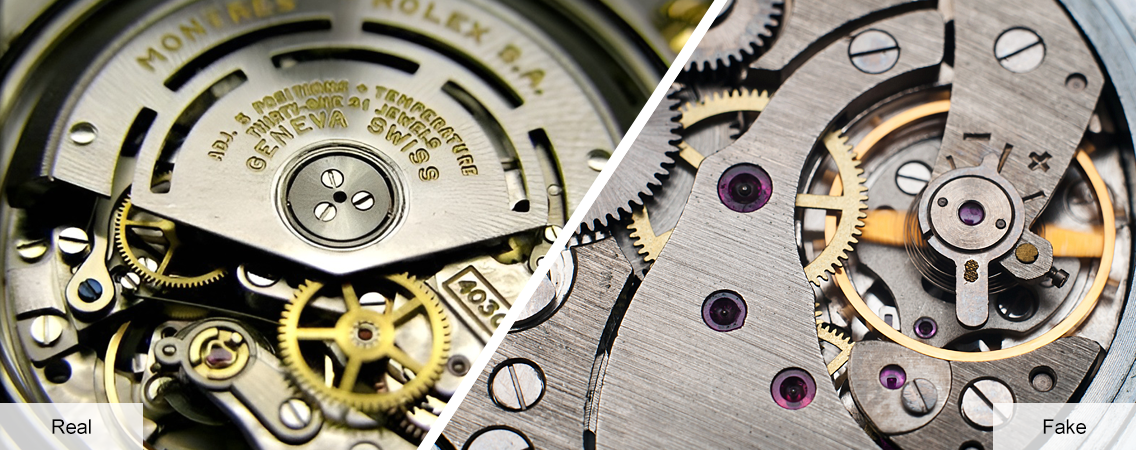
A true Rolex movement is an example of world-class watchmaking. You’ll find:
-
Flawless finishing: Bridges and rotors are beautifully machined, with clean edges.
-
Distinctive rotor design: Most modern Rolex calibres feature a half-moon-shaped rotor that winds smoothly in both directions.
-
Engraved components: Many internal parts bear the Rolex logo or calibre number, engraved with consistent depth and sharpness.
-
Certified accuracy: Every Rolex movement is first COSC-certified and then tested again by Rolex under its Superlative Chronometer standard of ±2 seconds per day. This certification is reflected on the dial, marked “Superlative Chronometer Officially Certified”, and confirmed by the movement itself, which carries a calibre engraving (for example, 3235 or 4130) and high-grade finishing consistent with Rolex’s chronometer standards. While the COSC stamp isn’t printed on the movement, these identifiers correspond to calibres officially recognised as Superlative Chronometers.
By contrast, counterfeit watches often contain:
-
Basic off-the-shelf movements (such as low-cost automatic or quartz calibres).
-
Poor finishing or unbranded components.
-
Incorrect or missing engraving.
-
No evidence of chronometer certification or consistent accuracy.
Even if a fake appears convincing externally, the internal mechanism nearly always exposes the truth. The difference in quality, precision, and layout becomes immediately apparent to a trained eye.
If you’re in any doubt, have the watch inspected by an authorised Rolex service centre or a qualified independent watchmaker. They can open the case safely, verify the calibre, and confirm whether all internal parts are genuine Rolex components.
Why Trusting Your Seller Matters Most
While understanding the technical details of how to authenticate a Rolex is extremely valuable, the most reliable way to ensure you are buying a genuine watch is to purchase from a trusted and reputable dealer. Modern counterfeits can be highly sophisticated, and even experienced collectors can struggle to identify the most convincing fakes without specialist tools and knowledge.
Buying from a respected luxury watch specialist removes that uncertainty entirely. At UK Specialist Watches, every timepiece we offer has been thoroughly inspected, authenticated and vetted by experts with decades of experience in the high-end watch industry. Our diligence, attention to detail and commitment to the highest standards ensure that the watches we source represent some of the finest examples available in the UK.
Unlike informal marketplaces such as eBay, Gumtree or Craigslist, where authenticity is not guaranteed and buyers have limited protection, purchasing from a professional dealer provides complete peace of mind. We guarantee that every watch we sell is 100% authentic, accurately described and in exceptional condition. Our reputation has been built over many years through honesty, expertise and outstanding customer service, with many clients returning to us time and time again.
Buy From UK Specialist Watches With Confidence
Whether you're investing in your first Rolex or adding to a growing collection, choosing a trusted seller is the most important step you can take. When you buy from UK Specialist Watches, you’re not just purchasing a watch, you’re buying confidence, security and the assurance that your timepiece is exactly what it should be: an authentic, expertly verified example of luxury horology.
Browse Our Rolex Watches